The panel
Fixed with screws.
Removed the same way.
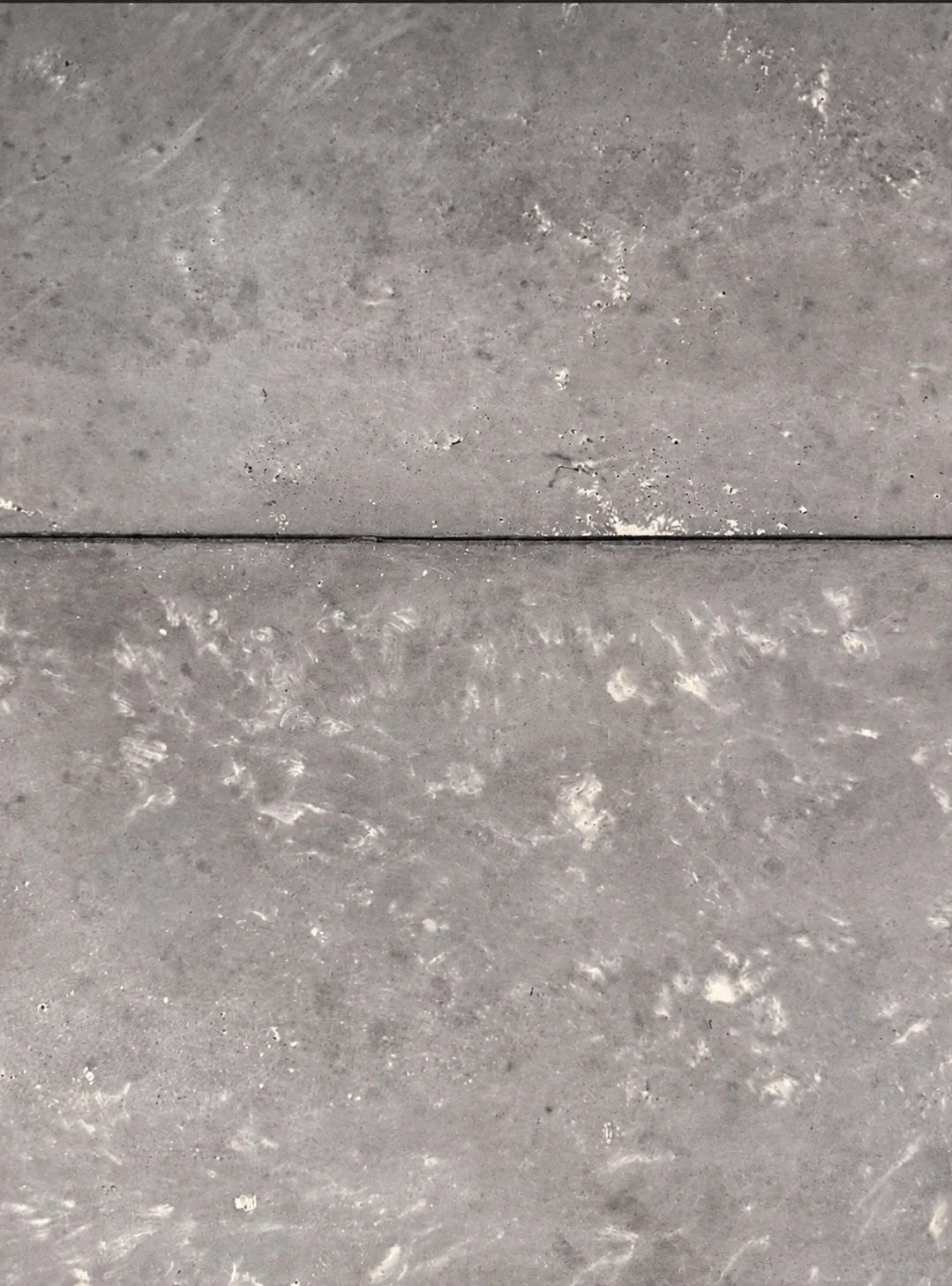
Rumett is a cast mineral wall panel for interior fit-out, cast 13 mm thick, with the cast face left visible as the finished surface. Nothing is filled, printed or painted over the face after installation.
Panels are screw-fixed to a supporting framework, so the fixing can be planned, inspected and reversed where the project detail allows it. The framework and fixing detail are confirmed for each project.
Ask about your specification →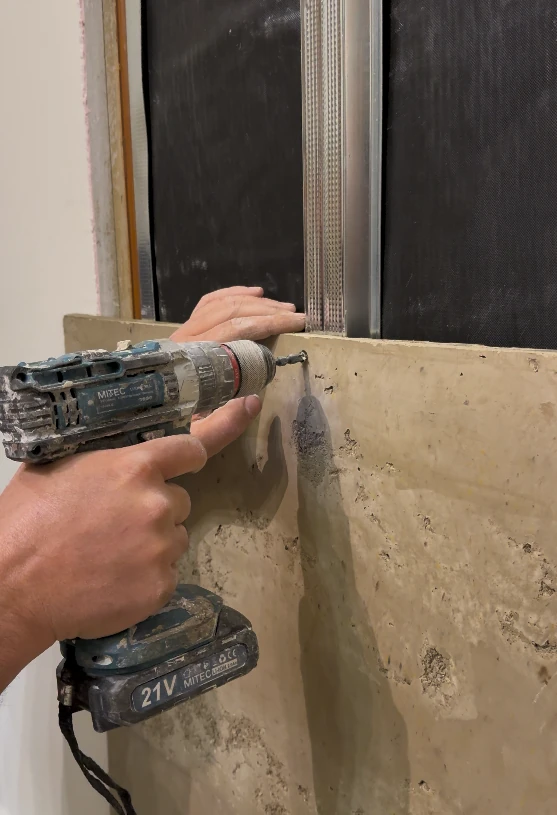
How it goes up
Install. Remove. Use again.
The connection is mechanical, not adhesive. That is what makes the second and third of those steps possible at all.
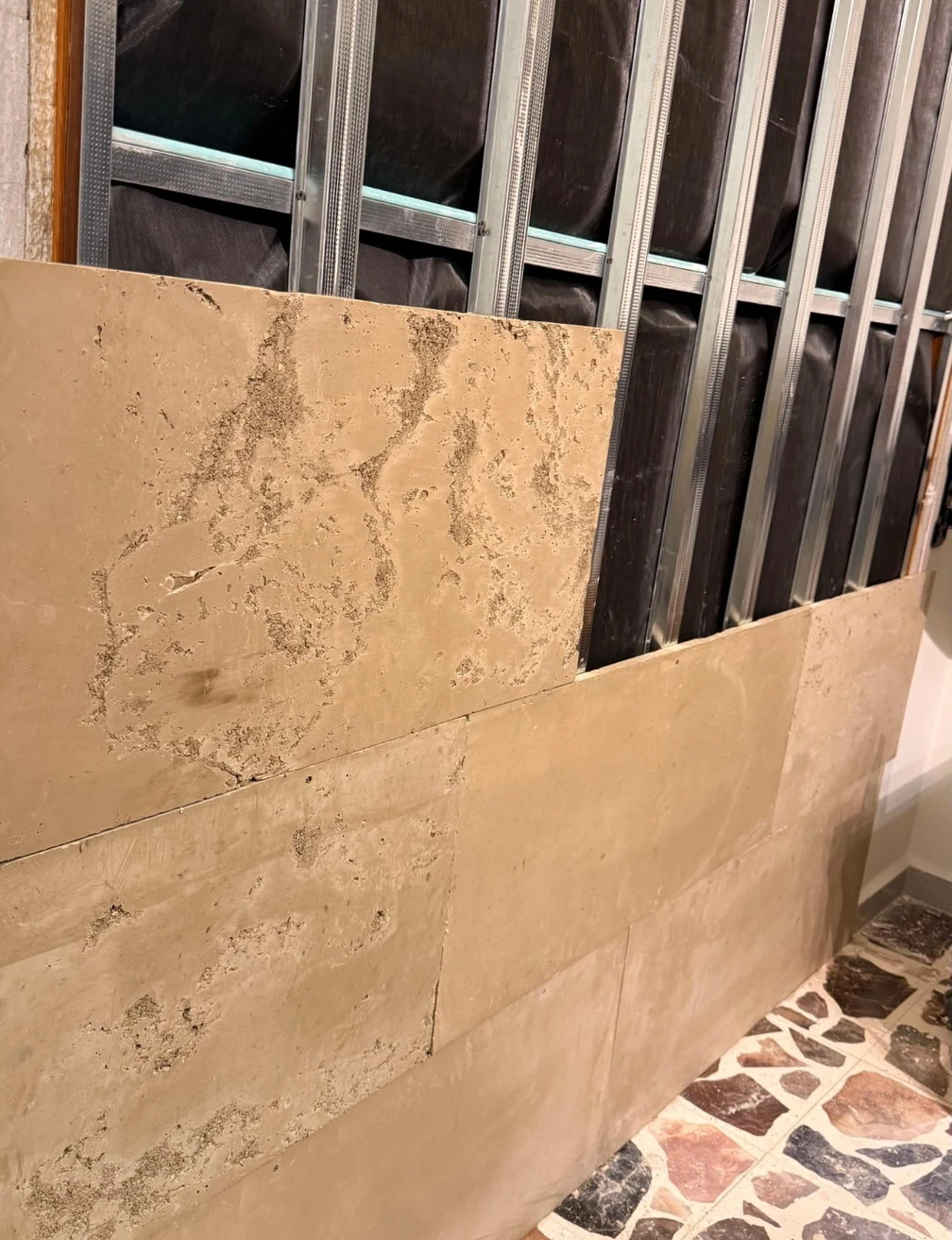
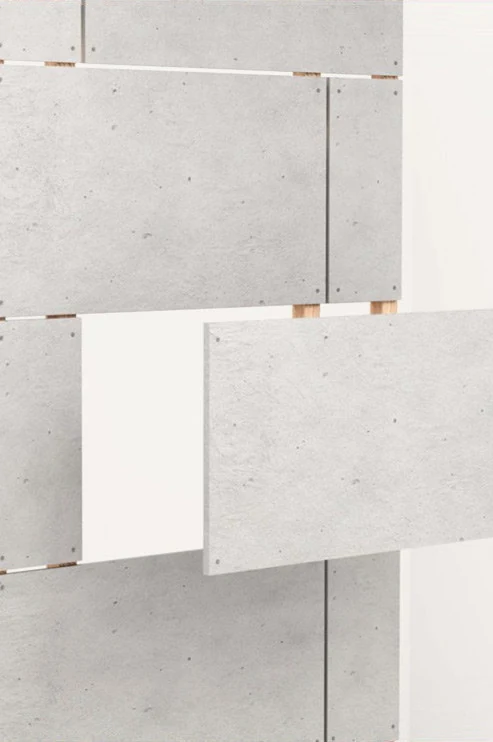
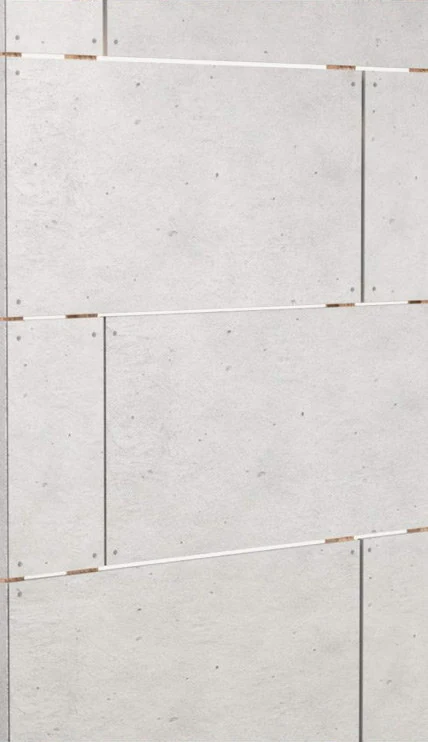
Panels are screw-fixed to a supporting framework. The cast face is the finished surface, so there is no filler or paint applied to the panel once it is up.
Interior wall cladding
Interior wall cladding, mechanically fixed.
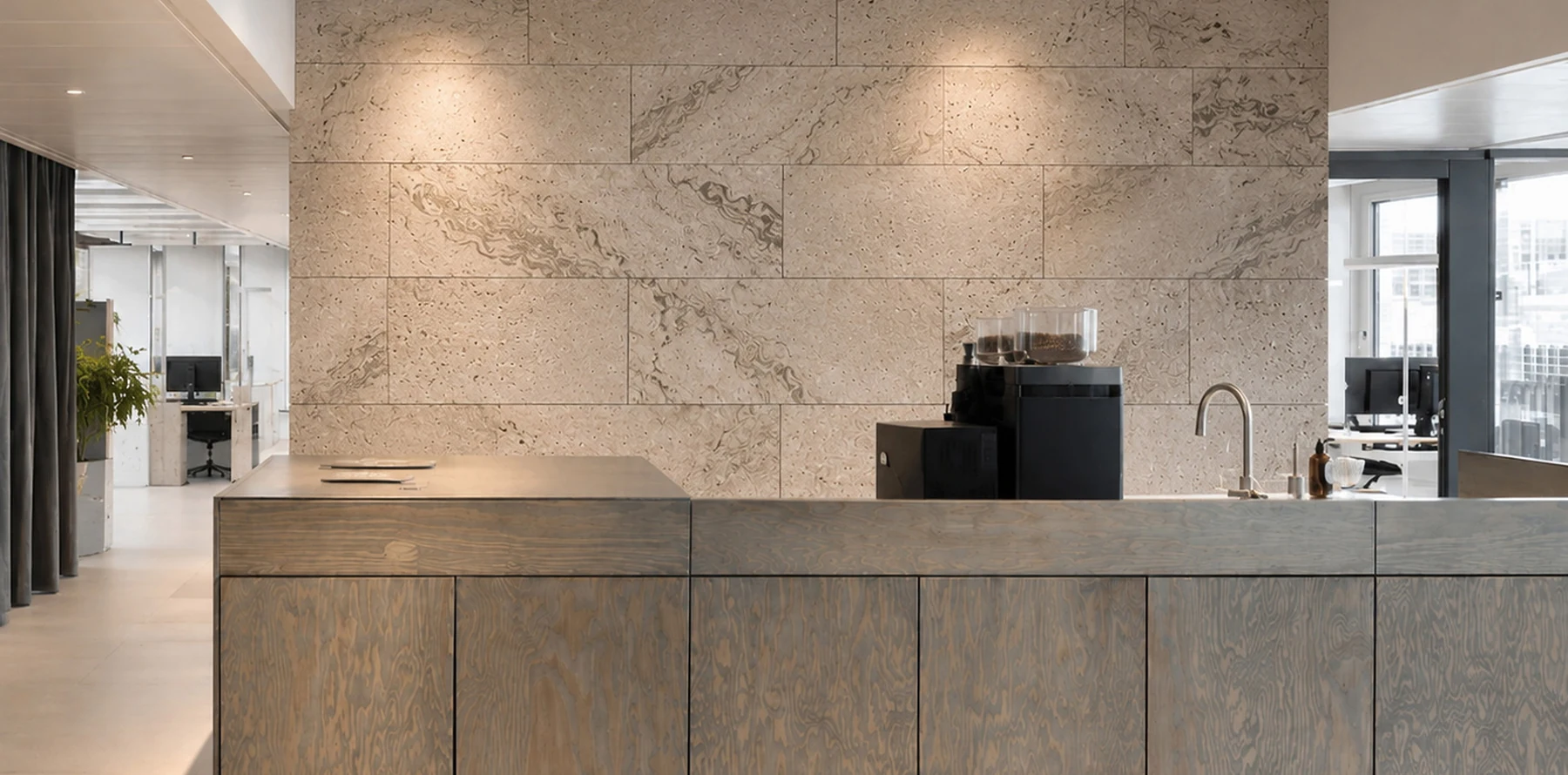
Rumett is specified as an interior wall panel or wall-cladding surface where the joint pattern, cast variation and fixing strategy are part of the design. It is not an adhesive tile or a painted board. Confirm the support structure, format, edges and access to fixings before specifying.
The panel in practice
The joint is part of the drawing.
Panels arrive at a set format, so the joint pattern is something to lay out rather than hide. Raking light across the wall picks up the cast variation and the rhythm of the joints together.
Format and construction
Nominal panel thickness
Solid mineral.
- Application
- Interior walls
- Composition
- Gypsum and bio-ash
- Surface
- Exposed cast mineral face
- Format
- Set per project
- Thickness
- 13 mm nominal
- Fixing
- Mechanical fixing to a supporting framework
- Collections
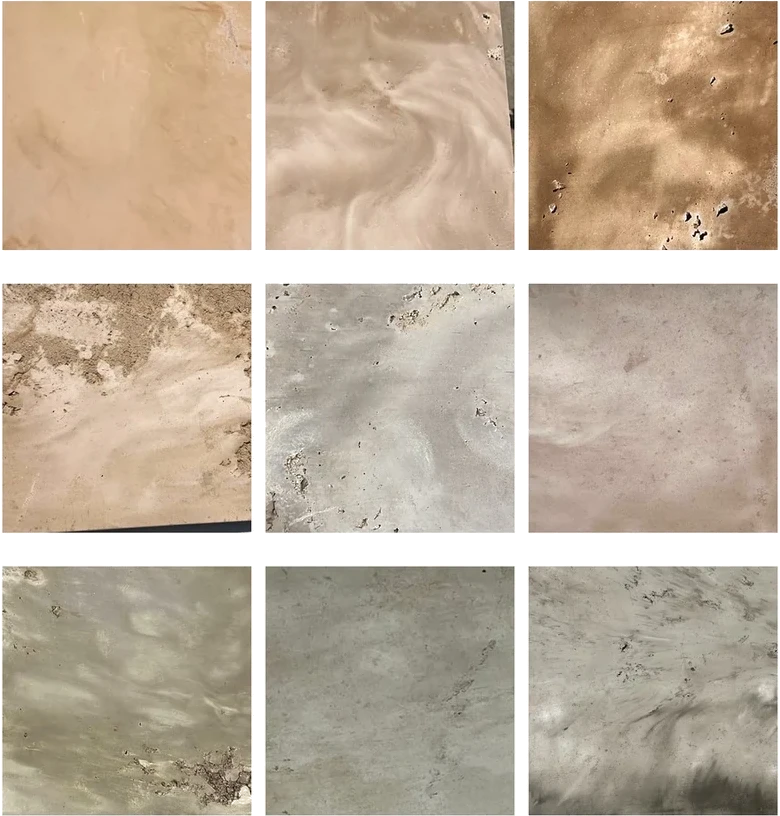
- Six finishes, plus bespoke colours
Format is set per project. Confirm project suitability, current formats and the compatible construction before specifying.
Composition, casting and fire documentation →Technical documentation →Flexible interiors
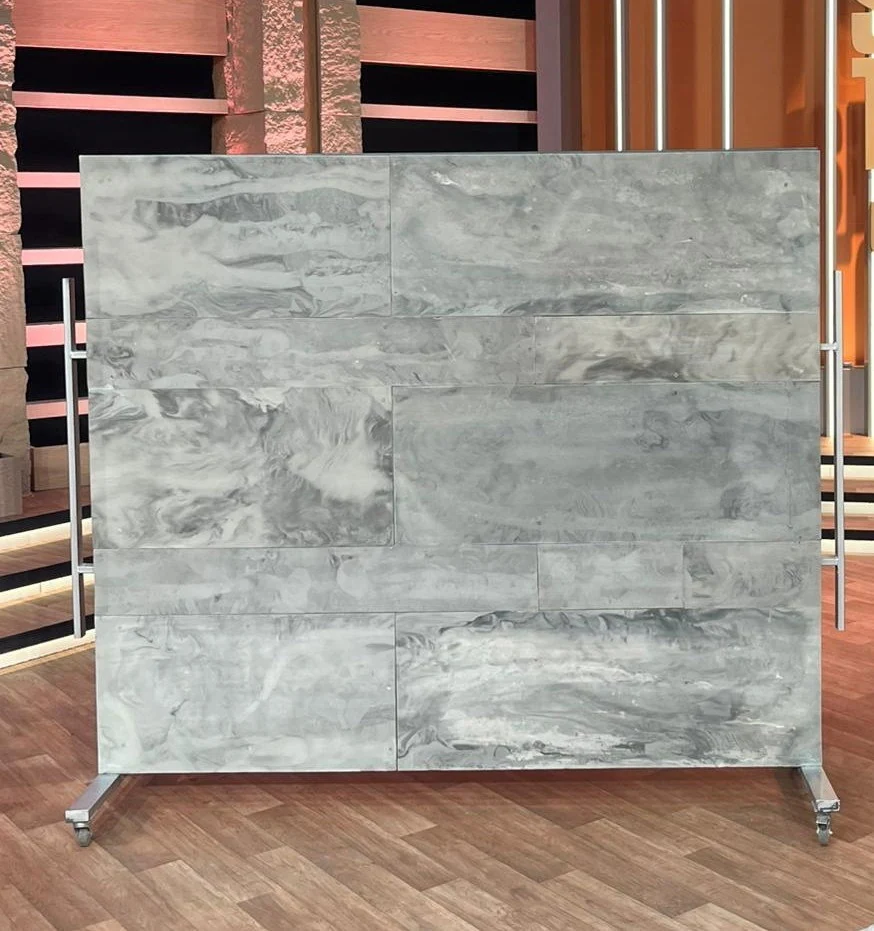
A wall that moves with the space.
On a wheeled frame the same panels work as a freestanding divider. The surface stays the same; only what carries it changes, and its position can move with the layout.
Before you specify
A few practical questions.
Is Rumett a wall panel or wall cladding?
Both descriptions may apply. Rumett is a cast mineral wall panel used as an interior wall-cladding surface, fixed mechanically to a supporting framework.
Where can the panel be used?
Interior walls. Confirm suitability with us for the specific setting before you specify it.
What does the panel fix to?
A supporting framework. Steel or timber may be used where the project detail calls for it, but the fixing detail and structural retention are confirmed for the project, with the project engineer where required.
What sizes are available?
Panels are 13 mm nominal thickness. The format is set per project, so confirm the current range for your project before specifying.
Can panels be removed and used again?
That is the design intent. Panels are made to come off the framework and be fixed again in a new layout, provided the project is detailed for removal from the start: accessible fixings, planned joints, protected edges and a practical route for handling and storage. Reuse is not an automatic guarantee; it also depends on the condition of the panels after removal.
How should I assess fire performance?
The classification, the standard it was issued against and the scope it covers are set out on the material page. Reaction to fire and fire resistance are different tests — tell us which your project needs and we will send the matching documentation.
Will every panel look the same?
No. The panel is cast, so colour and veining vary through the face and from panel to panel. Select the finish from physical samples, seen in the light of the project.
What do the joints look like?
The joints stay visible. Nothing is filled or taped over them, so the joint lines are part of the finished surface, and the joint layout is drawn for each project.
How do I get pricing and delivery information?
Tell us the wall and what it has to do, its approximate area, the finish you have in mind, the location and when you need it. We come back with price and delivery for that project.
Start with the material
Find its place in your project.
See the colour, texture and edges in your own light. Share the setting, the approximate area and the surface you have in mind, and we will send physical samples and the project documentation.
Request samples and documentation →Vela uses the same panel on a movable frame →