Material
The presence of stone.
The lightness of gypsum.
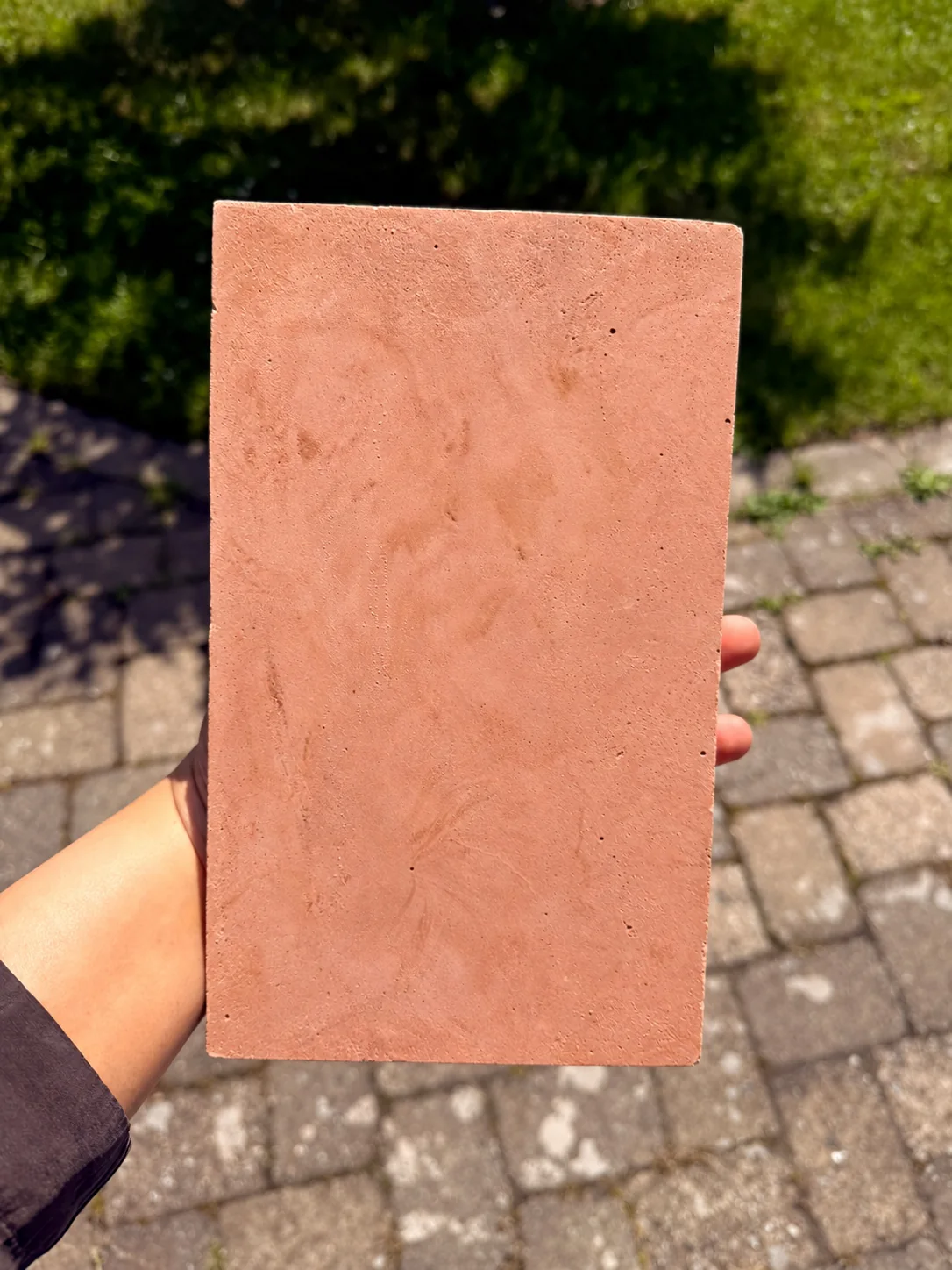
Mineral wall panels, cast solid with the colour through the body.
Rumett makes cast mineral wall panels where the visible face and the body are the same material. The surface is not a laminate or printed layer.
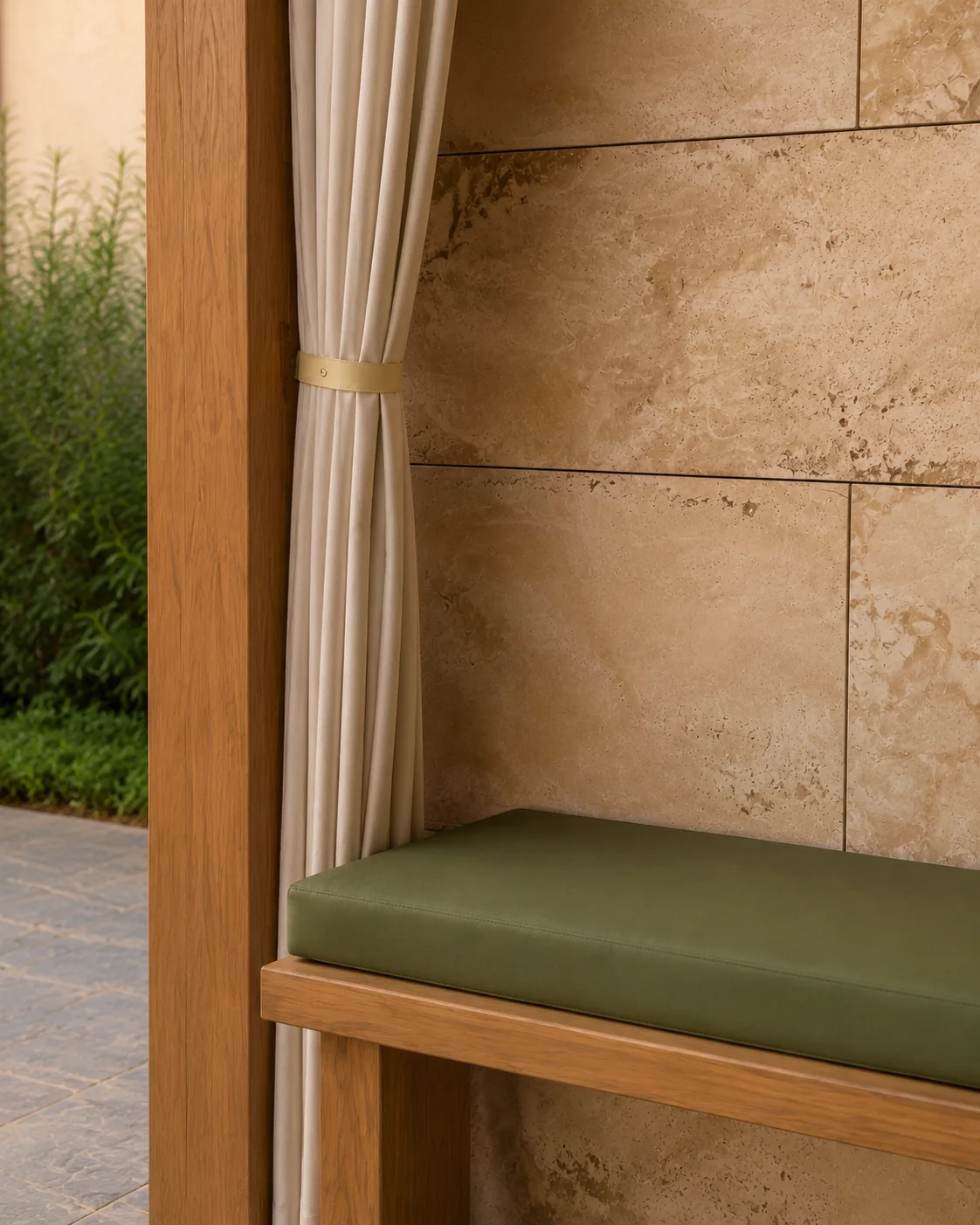
The panel is cast from gypsum and bio-ash, with the cast texture, colour-through body and visible joints treated as part of the design.
Request samples →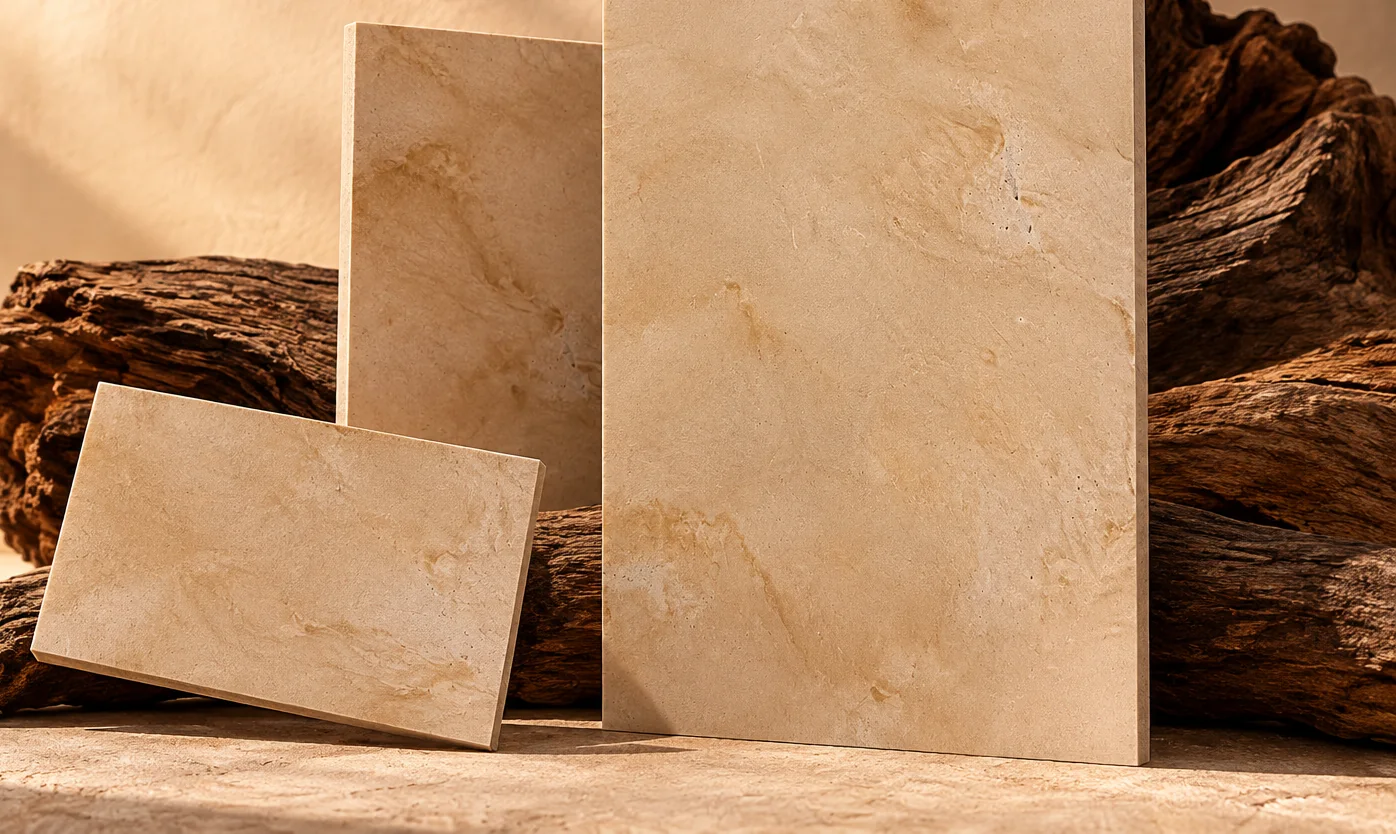
01 / The ingredients
What goes into the panel.
Two materials, cast together. The exposed face and the panel are one material.
Gypsum
The mineral at the heart of the panel, and the reason it casts, cuts and takes a colour the way it does.
Bio-ash
Combined with the gypsum to form Rumett’s cast material.
Cast mineral panel
Cast mineral panel material.
The panel is cast as a solid mineral body, with the visible surface formed in the casting process. Rumett uses gypsum and bio-ash in the body of the panel. Cuts and chips reveal the same material rather than a printed layer.
02 / The surface
Made to remain visible.
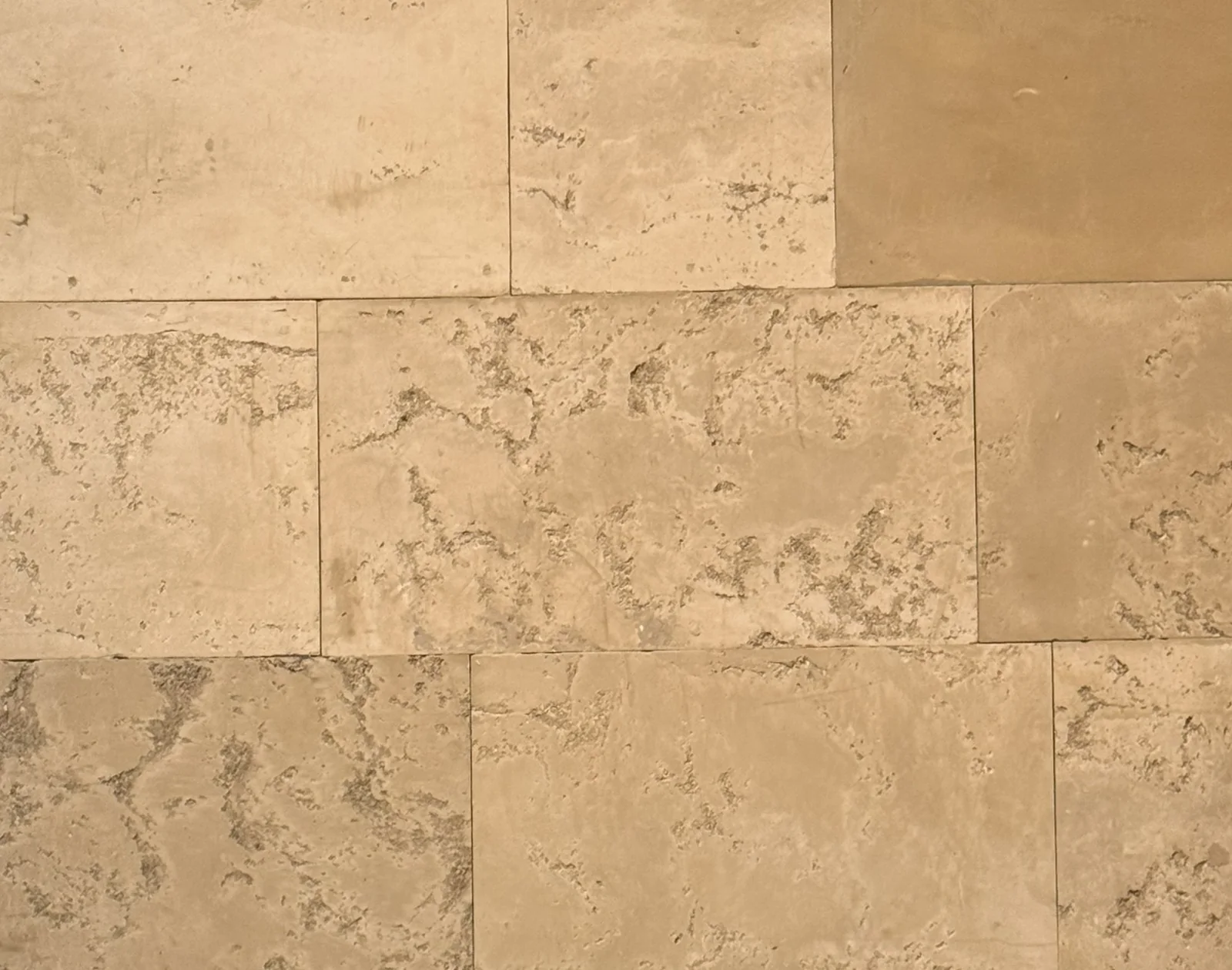
Because the panel is cast rather than printed or laminated, the face carries the variation of the pour. At wall scale it reads as movement across the surface; up close it is a fine mineral grain. Both are the same panel.
03 / The atelier
Cast for each commission, close to where it will live.
Every Rumett commission is cast in a small atelier set up close to the project, rather than made in a factory and shipped in. The mix is poured onto a flat casting bed, struck off to thickness, cut to size and lifted off. Panels are then dried according to the project setup. Casting location, drying time, handling and installation sequence are confirmed for each project.
The variation on the wall is the record of how each one was cast.
04 / In the room
How it reads in a room.
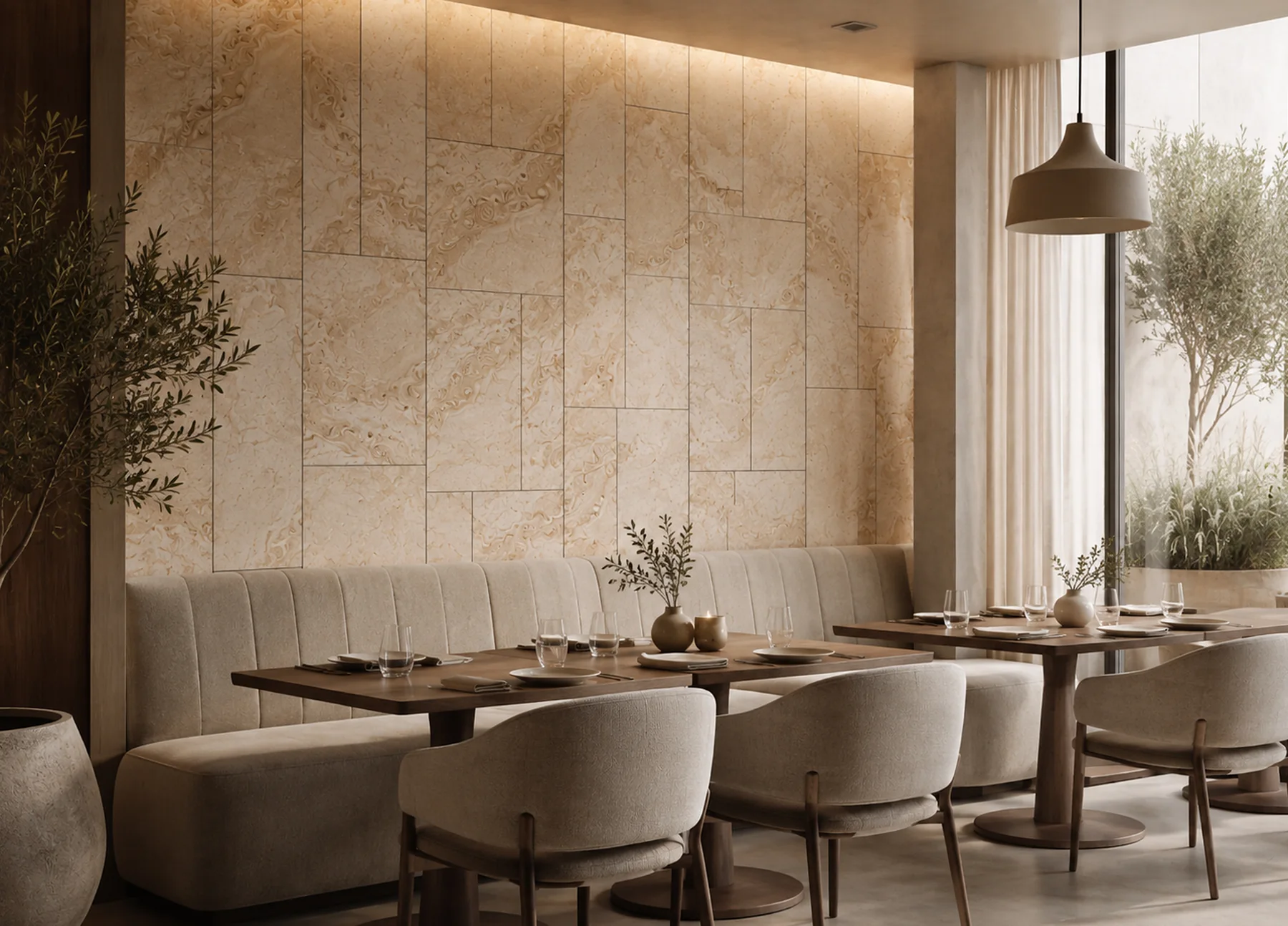
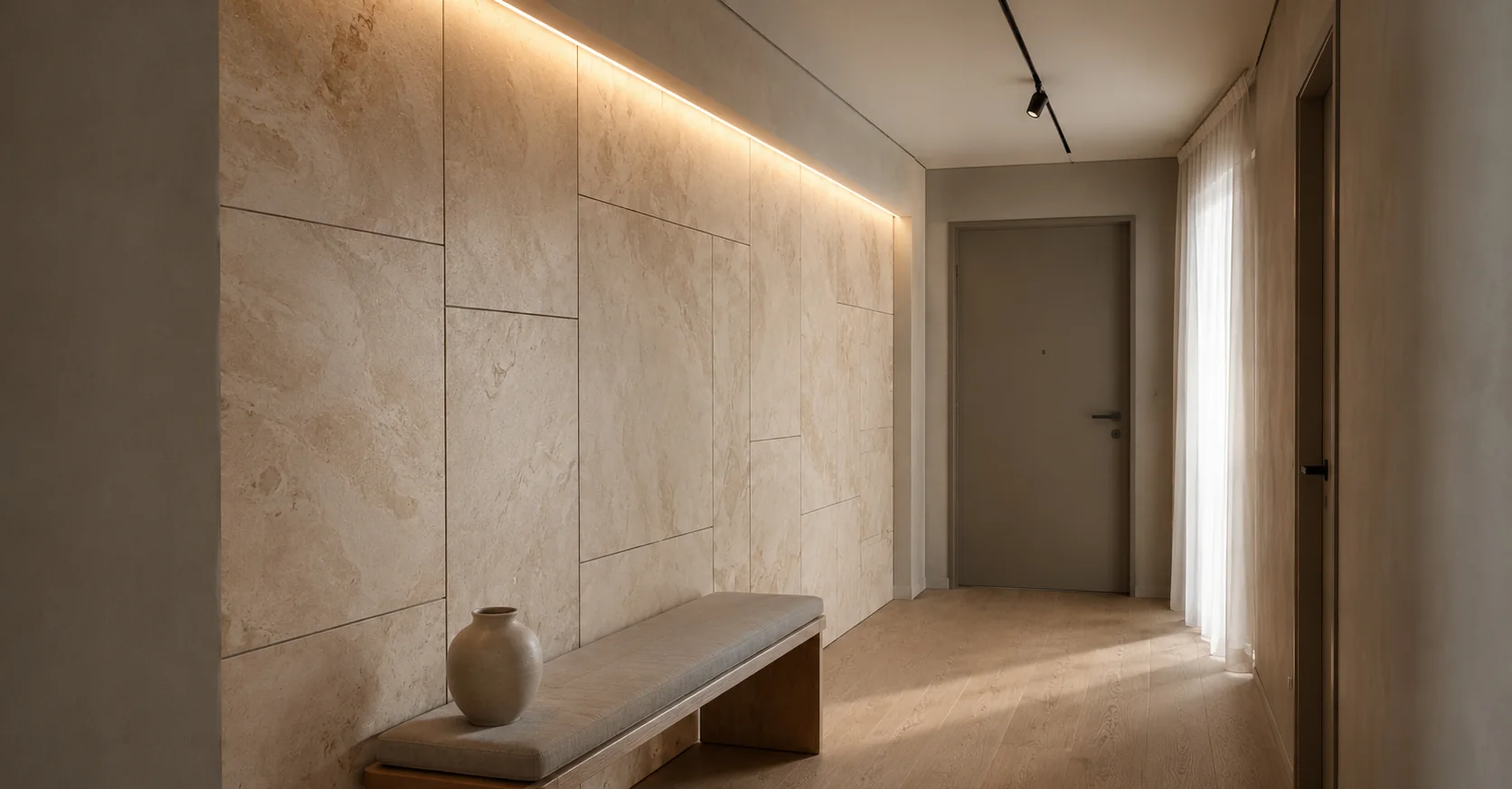
A dining room lit along the top of the wall, and an entrance hall in daylight — drawn to show the panels at the scale people live with them.
05 / The next use
Think beyond the first installation.
Whether a panel can be used again is decided largely by how it went up — the fixing and removal sequence is set out on the panel page. What belongs here is what happens to the material itself once it comes down.
Reuse and recycling are different steps.
Reuse means using an existing panel again. Recycling means processing material to make a new product. Both need a practical route — somewhere the panel can go, or a processor able to accept the material. Ask us about suitability for reuse and what the options actually are in your location.
Project documentation
A1
Reaction to fire.
Rumett mineral panel is classified A1 for reaction to fire in accordance with EN 13501-1:2018, issued by DBI.
The classification applies to the product defined in the report. Coverage of sealed or lacquered variants remains to be confirmed. Reaction to fire and fire resistance are different tests.
Request the classification report → Technical documentation →Questions
About the material.
What is Rumett made from?
Rumett is a cast mineral panel. Its body uses gypsum and bio-ash, cast together.
Is the surface a coating?
No. The visible face is the panel material itself. Colour and movement are formed during casting rather than printed or laminated on top.
What fire documentation is available?
Rumett mineral panel is classified A1 for reaction to fire in accordance with EN 13501-1:2018, issued by DBI, within the scope of the report. Sealed or lacquered variants remain to be confirmed unless separate documentation is issued. Request the DBI report for the exact scope before specifying.
Start with the material
See it in your own light.
Screen colour is a starting point. Tell us the room and the light it gets, and we will send physical samples cast in the workshop, with the documentation your project team needs.
Request samples and documentation →